
RESUMEN
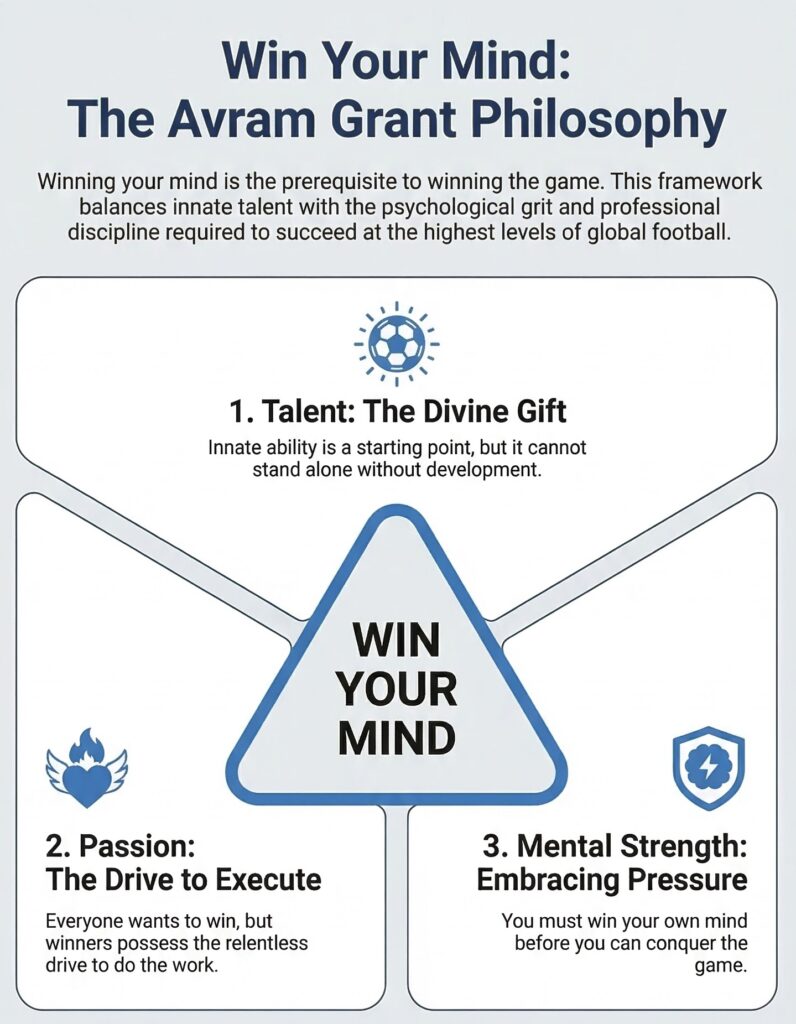
- El modelo “Win Your Mind” de Grant evalúa a los jugadores sobre tres pilares: talento, pasión y fortaleza mental.
- Si falta uno de ellos, un jugador no puede llegar a la élite.
- El talento por sí solo no basta. Pasión significa hacer el trabajo duro cada día, no solo querer ganar.
- Fortaleza mental significa usar la presión como combustible, no temerla.
- Sobre la gestión del vestuario: lucha con el jugador, no contra él.
- La disciplina es una herramienta de coste y beneficio, no una postura moral.
- La motivación depende en un 80 % del deseo de triunfar y en un 20 % del miedo al fracaso. Un elogio casi siempre funciona mejor que una bofetada.
Avram Grant ha entrenado en todos los niveles del fútbol. Empezó a los 18 años como entrenador de las categorías inferiores del Hapoel Petah Tikva, ganó cuatro ligas israelíes en sus etapas en el Maccabi Tel Aviv y el Maccabi Haifa, y dirigió a la selección de Israel durante cuatro años. En Inglaterra se hizo cargo del Chelsea tras la salida de José Mourinho y llevó al club a la final de la Champions League de 2008, a la final de la Copa de la Liga y a una pelea por la Premier League que se decidió en la última jornada.
Después dirigió al Portsmouth, con el que llegó a la final de la FA Cup de 2010, y más tarde al West Ham y al Partizan de Belgrado, con el que ganó la liga serbia. En el ámbito internacional, llevó a Ghana a la final de la Copa África de 2015 y después dirigió a la selección de Zambia.
El triángulo: talento, pasión y fortaleza mental
El modelo de desarrollo de jugadores de Grant se apoya en tres pilares. Si quitas uno, todo se derrumba. Ninguna inversión en una plataforma de gestión de clubes o en una base de datos de scouting cambia esa ecuación.
Talento
El talento es el punto de partida evidente. Es lo primero que llama la atención. Grant lo llama un “don divino” y coincide en que es imprescindible. Pero también advierte contra convertirse en su prisionero. Su ejemplo favorito viene del baloncesto: Michael Jordan fue la tercera elección de su draft. Kobe Bryant, la decimotercera. Ninguno de los dos era considerado el jugador con más talento de su año. Los dos se convirtieron en los mejores de su generación.
La lección para el fútbol base es contundente. Si todo tu sistema de evaluación se basa en detectar el talento en bruto y nada más, se te escaparán los jugadores que de verdad llegan. Cualquier plataforma de coaching puede medir la técnica. Pocas miden lo que hay debajo.
Pasión
En la pasión, Grant traza una línea clara entre querer el éxito y hacer el trabajo que lo produce. Todo el mundo quiere ganar. Eso no es pasión. La pasión es la voluntad de dar los pasos difíciles, repetitivos y poco vistosos que exige mejorar. Cada día. Cuando nadie mira.
Grant imagina el éxito como una pirámide. El objetivo está en la cima. Los escalones para llegar son durísimos. La pasión es lo que hace que un jugador los suba de todos modos.
Fortaleza mental
La fortaleza mental es el pilar que Grant más tuvo que defender. Al principio de su carrera en Israel, los críticos despreciaban su interés por la psicología. Su argumento: a los futbolistas profesionales se les paga por rendir, no por tumbarse en el diván de un psicólogo. Grant no les hizo caso.
Su respuesta es sencilla. El fútbol es un deporte de presión. No solo la presión sobre el balón en el campo. La presión de la afición, de los medios, de uno mismo. Si afrontas un partido totalmente relajado, es que no te importa lo suficiente. La presión no es el enemigo. Es el motor. Los jugadores y entrenadores que aprenden a usarla, en lugar de esconderse de ella, son los que ganan cuando de verdad importa.
Gestión del vestuario: 25 personas, un equipo
Incluso con el triángulo bien asentado, un entrenador tiene que enfrentarse a la realidad. Una plantilla de 25 jugadores son 25 orígenes, caracteres y motivaciones distintos. Grant lo dice sin rodeos: puedes tener a un jugador que creció en la abundancia sentado junto a otro que creció sin nada. Uno con título universitario junto a otro que dejó el colegio a los doce años. Y aun así, el que dejó el colegio puede tener una inteligencia futbolística que lo convierte en la persona más importante del vestuario.
El trabajo del entrenador no es borrar esas diferencias. Es conseguir que todos remen en la misma dirección. La frase de Grant: lucha con el jugador, no contra él. Saca lo mejor de cada jugador para el equipo.
Esto se aplica directamente a la disciplina. Grant la trata como una herramienta, no como un principio. Contó una anécdota de su etapa en el Chelsea sobre un jugador italiano con talento pero conflictivo al que el club quería fichar por 80 millones de dólares. La respuesta de Grant: si el jugador marca 18 goles por temporada, el dolor de cabeza no compensa. Si marca 30, sí. No es cinismo. Es un análisis honesto de coste y beneficio, el mismo razonamiento que aplica cualquier dirigente de club al valorar si una nueva plataforma de coaching o un nuevo fichaje para el cuerpo técnico merecen la inversión.
La regla del 80/20 de la motivación
Grant cierra esta parte de su filosofía con una proporción. Calcula que a los deportistas los mueve en un 80 % el deseo de triunfar y en un 20 % el miedo al fracaso. Un elogio, dice, casi siempre funciona mejor que una bofetada.
Eso no significa evitar las conversaciones difíciles. Significa entender que el refuerzo positivo construye más de lo que destruye la crítica. La mejor plataforma de gestión de clubes del mundo puede mostrar datos de rendimiento, detectar patrones de asistencia y seguir los hitos de desarrollo. Pero nada de eso sirve si el entrenador que da la valoración no entiende con quién está hablando y qué necesita escuchar esa persona.
El modelo “Win Your Mind” de Grant no es una iniciativa de salud mental añadida a un programa de fútbol. Es la base sobre la que se construye el programa. El talento sin pasión se estanca. La pasión sin fortaleza mental se desmorona bajo presión. Y un equipo lleno de jugadores con talento, pasión y fortaleza mental sigue necesitando un entrenador que sepa gestionar personas, no solo tácticas.
En la segunda parte veremos cómo aplicó Grant estos principios en tiempo real en el Chelsea, el Portsmouth y a lo largo de su carrera internacional.
Preguntas frecuentes
“Win Your Mind” es el modelo de desarrollo de jugadores de Grant, basado en tres pilares: talento, pasión y fortaleza mental. La idea central es que un jugador debe ganar la batalla interior antes de poder ganar en el campo. Grant sostiene que, si falta cualquiera de estos tres elementos, es imposible llegar al máximo nivel.
Grant empezó a entrenar a los 18 años en las categorías inferiores del Hapoel Petah Tikva, en Israel. Ganó cuatro ligas israelíes con el Maccabi Tel Aviv y el Maccabi Haifa, dirigió a la selección de Israel durante cuatro años y después dio el salto a Inglaterra, donde entrenó al Chelsea, al Portsmouth y al West Ham. También dirigió al Partizan de Belgrado (con el que ganó la liga serbia), a la selección de Ghana (finalista de la Copa África de 2015) y a Zambia.
Grant utiliza tres criterios: talento (la capacidad natural), pasión (el impulso para hacer el duro trabajo diario) y fortaleza mental (la capacidad de rendir bajo presión). Advierte contra sobrevalorar el talento en bruto, y pone como ejemplo a Michael Jordan (tercera elección del draft) y a Kobe Bryant (decimotercera), jugadores cuya pasión y fortaleza mental importaron más que su puesto en el draft.
Grant ve la disciplina como una herramienta práctica, no como un principio moral. Aplica una lógica de coste y beneficio: un jugador conflictivo que marca 18 goles no compensa, pero uno que marca 30 quizá sí. Su filosofía general es luchar junto a los jugadores para sacar lo mejor de ellos, no contra ellos. Calcula que a los deportistas los mueve en un 80 % el deseo de triunfar y en un 20 % el miedo al fracaso.
Los clubes de fútbol base pueden usar el modelo de Grant para crear programas de evaluación y desarrollo que vayan más allá de la técnica. Una plataforma de gestión de clubes puede registrar los datos de rendimiento, pero los entrenadores también deben valorar la pasión y la fortaleza mental al tomar decisiones sobre el desarrollo. El enfoque de Grant confirma que la coherencia en el entrenamiento de todos los equipos, junto con la comprensión de la psicología de cada jugador, es lo que separa los buenos programas de los excelentes.
Grant sostiene que el fútbol se define por la presión: no solo la presión táctica, sino también el peso psicológico de las expectativas de entrenadores, familias y de los propios jugadores. Los jugadores que aprenden a usar esa presión como motivación, en lugar de encogerse ante ella, son los que rinden en los momentos decisivos. Para cualquier plataforma de coaching que siga la evolución de los jugadores, la fortaleza mental es un indicador de desarrollo tan importante como las métricas físicas o técnicas.

Cómo transformar la toma de decisiones del jugador en el fútbol
Paul Barry breaks player decision-making into four stages: Identify, Decide, Execute and Action. What each stage asks of a young player, with…
Oct 20, 2026
Tendencias modernas en las jugadas a balón parado
Tendencias modernas, aprovechamiento del borde del área y estrategias de entrenamiento eficaces
19 de septiembre de 2026
Marko Krnjić: 5 ideas clave para el entrenador de fútbol moderno
Lecciones de una carrera en el alto rendimiento
18 de junio de 2026