RESUMEN
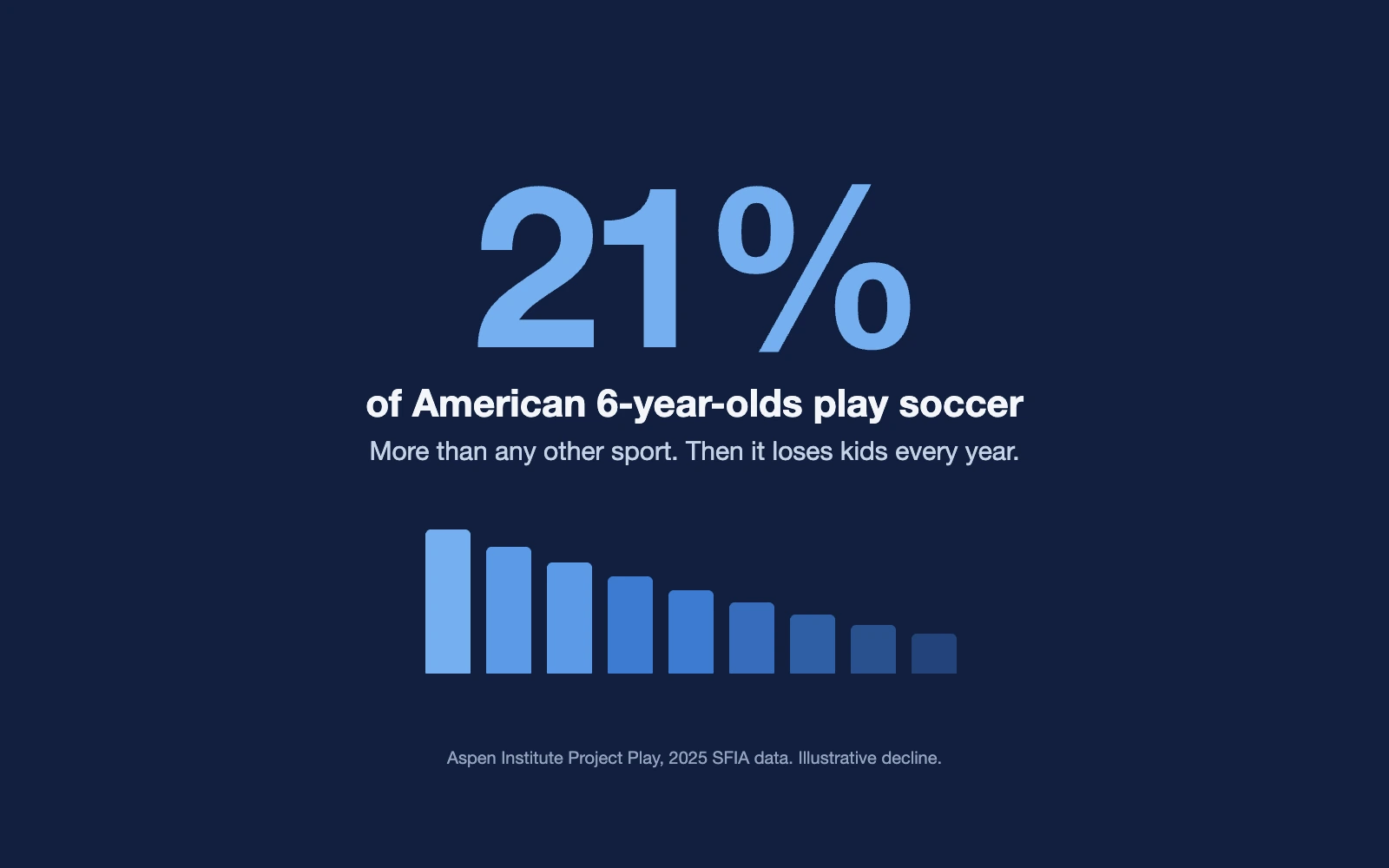
New Aspen Institute Project Play data shows soccer draws more American 6-year-olds than any other sport (21%) and then loses kids every year after. Kids quit at 12.9 on average, mostly over coaching and feeling not good enough, while the number of youth coaches has fallen from 8.4 million to 6.9 million since 2022. Five things a club can do about it, starting with measuring re-registration by birth year.
Every club director I talk to wants to know how to get more players in the door. The new numbers from the Aspen Institute’s Project Play say the problem is somewhere else. Getting kids in is the part we are already good at. Keeping them is where we fail.
Project Play published its analysis of the 2025 SFIA participation data on 27 October 2026. The headline for our sport is simple. Soccer draws more 6-year-olds than any other sport in the United States, 21% of them. And then, in Project Play’s own words, it immediately and continuously starts losing kids every year.
That line should bother every technical director. We win the recruitment battle at age 6 and then spend the next ten years giving those players back.
The numbers behind it
A few more data points from the same report and from the Aspen Institute’s National Youth Athlete Survey, published in April 2026, which asked 3,827 kids aged 10 to 17 why they play and why they stop.
- Core soccer participation among 6 to 12 year olds actually rose 7% between 2019 and 2025, before any World Cup effect. Demand is not the issue.
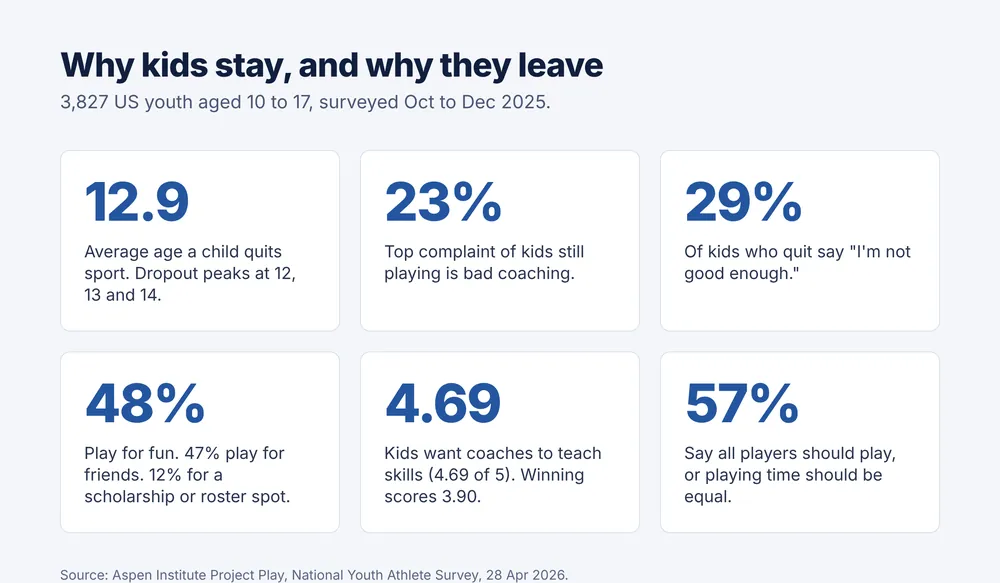
- The average age a child quits sport is 12.9. Dropout peaks at 12, 13 and 14. More than a third of all quitters leave in that three-year window.
- The top complaint of kids who still play is bad coaching, at 23%. Among kids who quit, the two most common answers are “I’m not good enough” (29%) and bad coaching (21%).
- Kids play for fun (48%) and friends (47%). A college scholarship or roster spot motivates 12%.
- Asked what they want from a coach, kids rated teaching sport skills 4.69 out of 5 and life skills 4.39. Winning came in at 3.90.
- Soccer players reported the highest rate of any sport of parents getting angry about their performance (16%) and comparing them to other kids (18%).
Put those together and the retention story writes itself. A child joins at 6 because it is fun and their friends are there. By 12 they are being sorted into A and B teams, the sideline has become tense, and a coach who may have had no training in the last year is telling them where they rank. Many of them decide they are not good enough and leave.
The coaching side is getting worse, not better
The same Project Play report shows the number of active coaches of kids 14 and under fell from 8.4 million in 2022 to 6.9 million in 2025. Three straight years of decline. Of the coaches who remain, 43% are 55 or older. And while 94% say they have had some training at some point, the share who completed any training in the previous 12 months fell by double digits in every category SFIA measures, from first aid to sport skills to motivation.
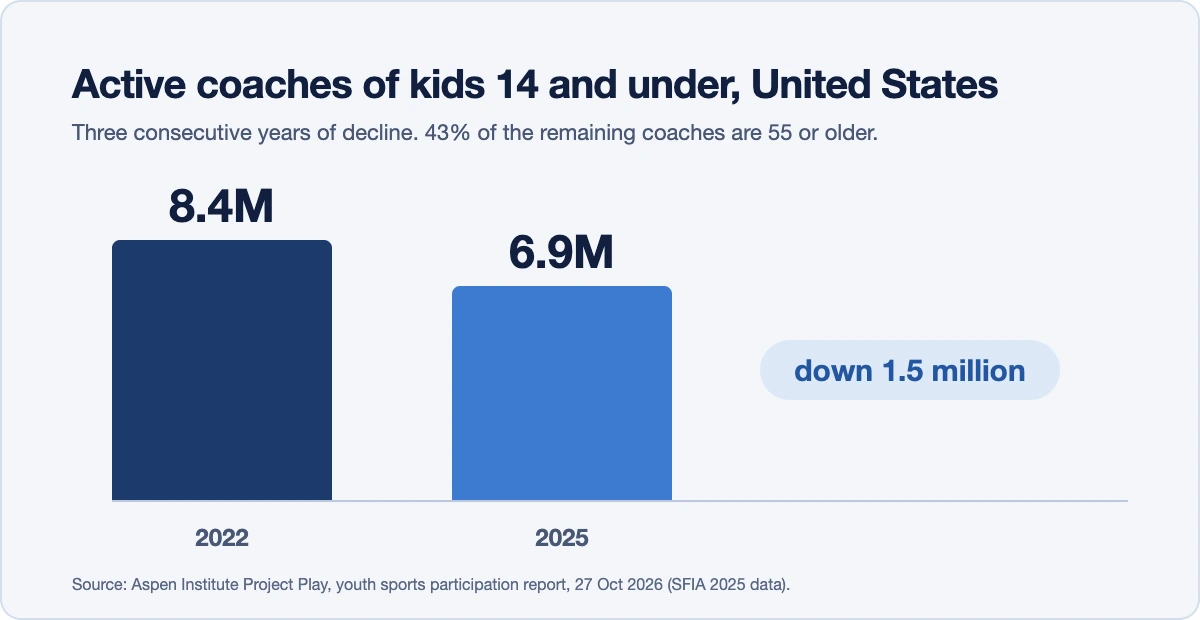
So the single biggest reason kids give for disliking their sport is coaching, and we have fewer coaches, older coaches, and less recent training than five years ago. These two trends are the same problem.
What a club can actually do
None of this is fixed by a new recruitment flyer. Here is what I would ask of any club that takes retention seriously.
1. Measure it. Most clubs know their total registration number and nothing else. Pull your re-registration rate by birth year. How many of last season’s U9s are still with you at U10? How many U12s made it to U13? If you cannot answer that in five minutes, you cannot manage it. The U12 to U14 transition is where Aspen says kids leave, so that is the number to watch.
2. Make coach training annual, not once. A certificate from 2019 is not coach development. Set a club standard that every coach completes something every season, and track it. A short in-house session on how to talk to a 12-year-old about their development counts. The kids are asking for skills and life skills first. Give coaches the tools for that.
3. Write a playing time policy and publish it. 57% of kids say all players should play or time should be equal. You do not have to agree at every age, but a written policy for U6 to U12 removes the biggest source of resentment on the sideline and takes the argument away from the coach.
4. Run a parent meeting before the season, not after the incident. Soccer parents are, by Aspen’s data, the most likely to get angry and to compare their child with others. A twenty-minute pre-season meeting that sets expectations on sideline behavior and on how development is communicated costs nothing and saves you a lot of difficult conversations later.
5. Give every player a development record. “I’m not good enough” is a conclusion kids reach when nobody shows them progress. A simple record of what a player worked on and improved this season, visible to the player and the family, changes that conversation from a ranking to a journey.
The World Cup has put more kids on the field this year. In every club I speak to the registration numbers are up. The data says most of them will be gone by 13 unless something changes in how we coach them and how we talk to their families. That part is in our hands.
At EasyCoach we built the player development, coaching and communication Centers for exactly this reason. If you want to see how clubs use them to track retention and coach development, the platform page is a good place to start.
Sources and further reading
- Aspen Institute Project Play, Youth sports participation report: Tennis, golf see biggest gains in 2025, 27 Oct 2026.
- Aspen Institute Project Play, National survey of youth and sports: 15 key findings, 28 Apr 2026.
- Aspen Institute Project Play, State of Soccer: New York City / North Jersey, 21 Apr 2026.
- Aspen Institute Project Play, State of Play 2025: Coaching Trends.
- Fort Worth Report, World Cup got more Fort Worth kids playing soccer. Will the momentum last?, 16 Sep 2026.
Frequently asked questions
According to the Aspen Institute Project Play National Youth Athlete Survey (April 2026), the average age a child quits sport is 12.9, with dropout peaking at ages 12, 13 and 14. Soccer participation itself peaks at age 6, when 21% of American 6-year-olds play, and declines every year after.
The top complaint of kids who still play is bad coaching (23%). Among kids who have quit, the most common answers are feeling not good enough (29%) and bad coaching (21%). Kids say they play mainly for fun (48%) and friends (47%), not for scholarships (12%).
Aspen Institute Project Play’s analysis of 2025 SFIA data puts active coaches of children 14 and under at 6.9 million in 2025, down from 8.4 million in 2022. 43% of those coaches are 55 or older.
Measure re-registration by birth year, make coach training an annual club standard, publish a playing time policy for younger age groups, hold a pre-season parent meeting on sideline behavior, and give every player a visible development record so progress is shown, not just rankings.
Cómo transformar la toma de decisiones del jugador en el fútbol
Paul Barry breaks player decision-making into four stages: Identify, Decide, Execute and Action. What each stage asks of a young player, with…
Oct 20, 2026
Tendencias modernas en las jugadas a balón parado
Tendencias modernas, aprovechamiento del borde del área y estrategias de entrenamiento eficaces
19 de septiembre de 2026
Marko Krnjić: 5 ideas clave para el entrenador de fútbol moderno
Lecciones de una carrera en el alto rendimiento
18 de junio de 2026