
RESUMEN
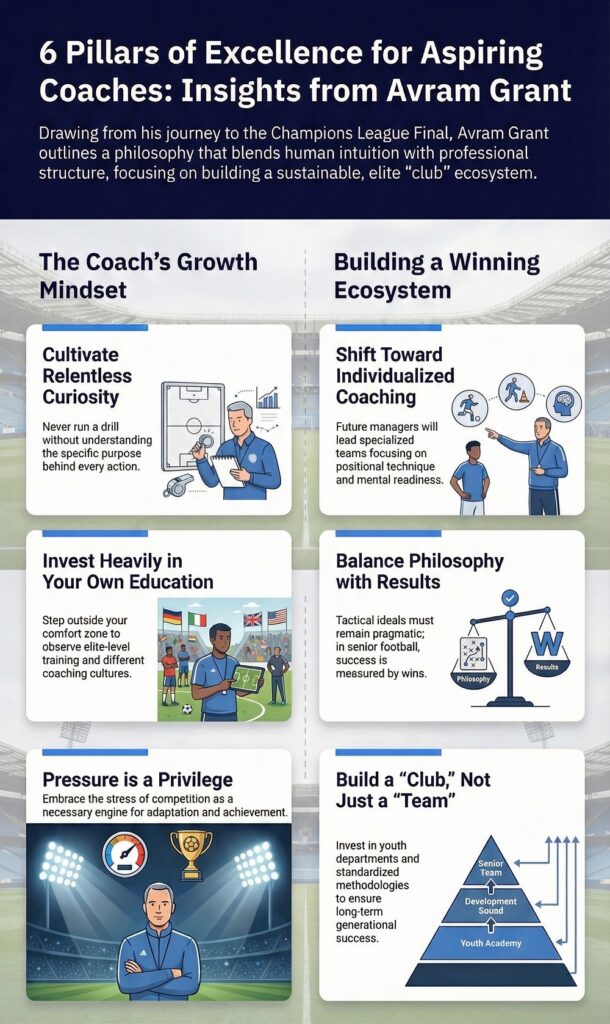
- Cultiva una curiosidad incansable: Nunca hagas un ejercicio sin entender su objetivo principal: pregúntate siempre cómo y por qué.
- Invierte en tu propia formación: Busca a los mejores entrenadores para observarlos y aprender de ellos, aunque te cueste de tu bolsillo.
- Prepárate para el entrenamiento individualizado: El futuro del fútbol es muy especializado: los primeros entrenadores supervisarán a auténticos ejércitos de especialistas por posición.
- Equilibra filosofía y resultados: El fútbol profesional te da cuatro meses, no cuatro años. Tus ideales tácticos tienen que estar construidos para ganar.
- Construye un club, no un equipo: Invierte en la cantera, en metodología y en infraestructura a largo plazo, no solo en los fichajes de la próxima temporada.
- La presión es un privilegio: La tensión antes de un partido no es una carga que gestionar: es el motor que impulsa los logros.
En la última parte de nuestra serie sobre la trayectoria de Avram Grant, vemos qué pueden hacer los futuros entrenadores para construir una carrera en el fútbol actual.
Grant empezó a entrenar casi por casualidad a los 18 años, en las categorías inferiores del Hapoel Petah Tikva. Fue subiendo peldaños hasta dirigir al Chelsea en una final de la Champions League y a varias selecciones. En nuestra conversación con Nir Levin, Grant compartió reflexiones muy valiosas pensadas para la próxima generación de entrenadores.
Hoy, aunque las plataformas de gestión de clubes ponen la base digital para organizar el día a día, los rasgos esenciales de un buen entrenador siguen siendo profundamente humanos. Estas son las principales lecciones de Avram Grant para entrenadores jóvenes y futuros entrenadores que quieren abrirse camino en el fútbol actual.
1. Cultiva una curiosidad incansable
Si hay un rasgo que definió los inicios de Grant, es una curiosidad insaciable. Cuando empezó a entrenar, se matriculó en Educación Física en el Kibbutzim College solo para entender mejor la mecánica de sus jugadores. Preguntaba constantemente “cómo” y “por qué” se hacían las cosas, movido por un profundo deseo de entender el propósito de cada acción en el campo.
Grant recordó que, al principio de su carrera, asistió a un seminario de entrenadores dirigido por un técnico veterano. Cuando el entrenador veterano mostró un ejercicio, Grant levantó la mano y preguntó: “¿Cuál es el objetivo de este ejercicio?”. El veterano, molesto por la pregunta de un joven recién llegado, respondió: “Joven, ¿ha venido aquí a confundirme?”. Para Grant, aquello reveló un error de fondo. Nunca hay que hacer un ejercicio por hacerlo. Los futuros entrenadores deben mantener una curiosidad incansable, cuestionando constantemente sus propios métodos y buscando el objetivo central de cada decisión táctica.
2. Invierte a fondo en tu propia formación
Mucho antes de la era de internet y del scouting por vídeo, Grant entendió que, para ser el mejor, tenía que observar a los mejores. Siendo un entrenador joven, pagó de su bolsillo los viajes por Europa para ver entrenar a los grandes equipos.
Es conocido su viaje a Italia para observar a la Sampdoria y estudiar los métodos de leyendas como Roberto Mancini y Fabio Capello. Grant llegó a recordar que saltó una valla solo para ver de cerca un entrenamiento de Capello. La inversión dio sus frutos. Años después, cuando Capello fue nombrado seleccionador de Inglaterra, el legendario técnico italiano buscó a Grant y pasó horas con él para entender las diferencias concretas entre dirigir un club y una selección. Hoy la formación es mucho más accesible, pero el impulso interior para buscarla sigue siendo imprescindible para triunfar.
3. Prepárate para la era del entrenamiento individualizado
Cuando le preguntaron hacia dónde va el fútbol, Grant fue tajante: el juego es cada vez más físico, lo que significa que los jugadores tendrán mucho menos tiempo para pensar. Para sobrevivir, tendrán que ejecutar una técnica de alto nivel bajo una enorme presión física.
Grant prevé un gran giro hacia el entrenamiento muy individualizado. Imagina un futuro en el que el primer entrenador funcione más como un mánager general, supervisando a un ejército de entrenadores muy especializados por posición, incluido personal cuyo único objetivo sea mantener a los suplentes mentalmente despiertos y listos en cuanto saltan al campo. Grant señaló a Johan Cruyff como pionero: en el Ajax, Cruyff contaba con un entrenador especializado cuya única función era enseñar a los jugadores a dar el centro perfecto. Los futuros entrenadores deberían plantearse desarrollar una especialidad muy concreta y aprender a coordinar estos planes de entrenamiento individualizados en toda la plantilla.
4. Equilibra tu filosofía con resultados inmediatos
Los futuros entrenadores suelen tener prisa por implantar grandes filosofías tácticas, pero Grant avisa de que el fútbol actual rara vez te da el lujo del tiempo. Compartió una conversación reveladora con Clarence Seedorf, que estaba dando el salto a los banquillos y creía que necesitaba al menos un año para implantar su filosofía en un club nuevo.
Grant le corrigió sin rodeos: “Tienes cuatro meses. Empiezas, tienes un mes de preparación y, si los resultados no son buenos a los tres meses, tienes un problema... puedes querer un año, ¡o seis! Da igual”. El fútbol base permite la paciencia, pero el fútbol profesional no perdona. La filosofía de un entrenador debe estar orientada a ganar. Como señala Grant, él no enseña a sus jugadores a jugar un “fútbol bonito” por pura estética; enseña buen fútbol porque el buen fútbol gana partidos.
5. Construye un “club”, no solo un “equipo”
Al dar el salto a los banquillos o asumir un cargo de director deportivo, existe la tentación de buscar soluciones inmediatas a corto plazo. Grant aprendió una lección profunda sobre esto en su etapa en el Hapoel Haifa, gracias al ya fallecido propietario del club, Robi Shapira.
Grant le presentó a Shapira una lista de cuatro jugadores de renombre que quería fichar. Le prometió: “Tráeme estos cuatro fichajes y te construiré un gran equipo”. La respuesta de Shapira cambió por completo su perspectiva: “No quiero construir un equipo. Quiero construir un club. Hay muchos equipos, pero no hay muchos clubes”. Shapira invirtió con fuerza en la cantera y sentó unas bases que durarían generaciones. Para los directores y entrenadores de hoy, ese es el objetivo final: usar un plan integral de gestión del club para alinear la academia, unificar la metodología de entrenamiento y crear itinerarios formativos a largo plazo.
6. La presión es un privilegio, no una sanción
Por último, Grant habló de la presión, tanto de la presión táctica en el campo como de la enorme presión psicológica fuera de él. Muchos jugadores y entrenadores se quejan de la tensión antes de un gran partido. La respuesta de Grant es sencilla: abrázala.
“Si no sientes presión antes de un partido, ¿cómo vas a conseguir algo?”, se pregunta. Llegar a un partido totalmente relajado, sin ninguna presión, no demuestra fortaleza; demuestra que no te importa. La presión es el motor necesario que empuja constantemente a las personas a adaptarse, superarse y alcanzar la grandeza.
La base digital para tu camino
Para los futuros entrenadores, dominar los aspectos tácticos y psicológicos del juego exige una vida de dedicación. Para liberar tiempo y centrarte en esos aspectos humanos tan importantes, necesitas una infraestructura fiable. EasyCoach es la base digital de las organizaciones deportivas: centraliza las operaciones, la comunicación y los datos de rendimiento en una sola plataforma unificada. Si combinas tu curiosidad incansable con herramientas de nivel profesional, puedes llevar un estándar de élite a cada equipo que dirijas.
Preguntas frecuentes
¿Cuál es el consejo más importante de Avram Grant para los futuros entrenadores?
Mantén la curiosidad. Toda la carrera de Grant se construyó preguntando por qué, no siguiendo las convenciones. Cree que los entrenadores que dejan de cuestionar sus propios métodos dejan de crecer.
¿Cómo abordó Avram Grant su propia formación como entrenador en los primeros años de su carrera?Pagó de su propio bolsillo los viajes por Europa para ver entrenar a los mejores clubes. Aprendió de entrenadores como Fabio Capello y Roberto Mancini mucho antes de que existieran las videotecas y el scouting digital. El impulso de buscar esa formación fue suyo, no de ninguna institución.
¿Qué prevé Avram Grant sobre el futuro del entrenamiento?Ve el fútbol avanzando hacia un entrenamiento muy individualizado. Los primeros entrenadores funcionarán más como mánager general, supervisando a entrenadores especializados en posiciones y funciones concretas, incluido personal dedicado solo a los suplentes.
¿Cuánto tiempo tiene de verdad un entrenador para implantar su filosofía en un club nuevo?Grant lo dice claro: unos cuatro meses. Un mes de preparación y, si a los tres no llegan los resultados, la presión crece muy rápido. La filosofía tiene que estar construida para ganar, no solo para expresar una idea.
¿Qué diferencia hay entre construir un equipo y construir un club?Grant aprendió esta diferencia de Robi Shapira, propietario del Hapoel Haifa. Un equipo gana partidos esta temporada. Un club invierte en cantera, metodología e infraestructura a largo plazo. La mayoría de las organizaciones apuntan a lo primero. Las mejores se comprometen con lo segundo.
¿Cómo deberían ver los entrenadores la presión antes de un partido?Grant le da la vuelta por completo. La presión antes de un partido no es un problema que resolver. Es la prueba de que te importa. Llegar relajado y sin tensión no es serenidad. Es indiferencia.
¿Cómo apoya EasyCoach el tipo de entrenamiento que describe Grant?La plataforma da a los clubes la base operativa para liberar a los entrenadores de la administración y que se centren en su oficio. Calendario, planificación de sesiones, seguimiento de jugadores y comunicación pasan por un único sistema, así que los entrenadores dedican menos tiempo a gestionar y más a desarrollar jugadores.

Cómo transformar la toma de decisiones del jugador en el fútbol
Paul Barry breaks player decision-making into four stages: Identify, Decide, Execute and Action. What each stage asks of a young player, with…
Oct 20, 2026
Tendencias modernas en las jugadas a balón parado
Tendencias modernas, aprovechamiento del borde del área y estrategias de entrenamiento eficaces
19 de septiembre de 2026
Marko Krnjić: 5 ideas clave para el entrenador de fútbol moderno
Lecciones de una carrera en el alto rendimiento
18 de junio de 2026