Mastering the Sideline: Effective Match Day Communication
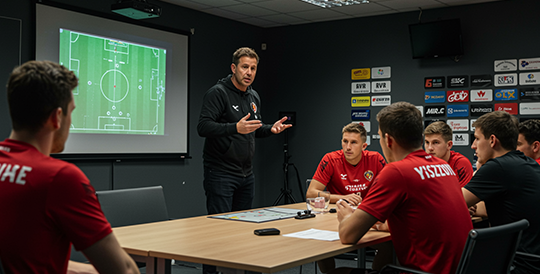
TL;DR
- Pre-Game: Focus on confidence and familiarity, avoid new tactics.
- In-Game: Model composure with your body language and keep verbal cues short.
- Halftime: Limit feedback to three actionable points.
- Post-Match: Prioritize player reflection over coach “lectures.”
Every coach knows that communication can make or break a team’s performance. Drawing on insights from seasoned coach educator Ashley Gumbrell, we’ve broken down how to streamline your messaging from the first whistle to the final debrief.
Setting the Stage: The Pre-Game Atmosphere
The locker room or pre-match huddle is often where coaches inadvertently lose their players by over-explaining. At this stage, athletes are dealing with a cocktail of nerves and adrenaline, meaning their “cognitive load” is already near capacity. Instead of introducing a complex new set-piece, focus on reinforcing the familiar.
Gambrell highlights the significance of consistency, particularly through visual aids. Using tactical boards with color-coded markers allows players to recognize their roles instantly. When a player sees their “team colour” positioned in a specific zone, they process that spatial information much faster than a verbal lecture, allowing them to enter the field with clarity rather than a mental checklist of instructions.
The In-Game Echo: Body Language as a Broadcast
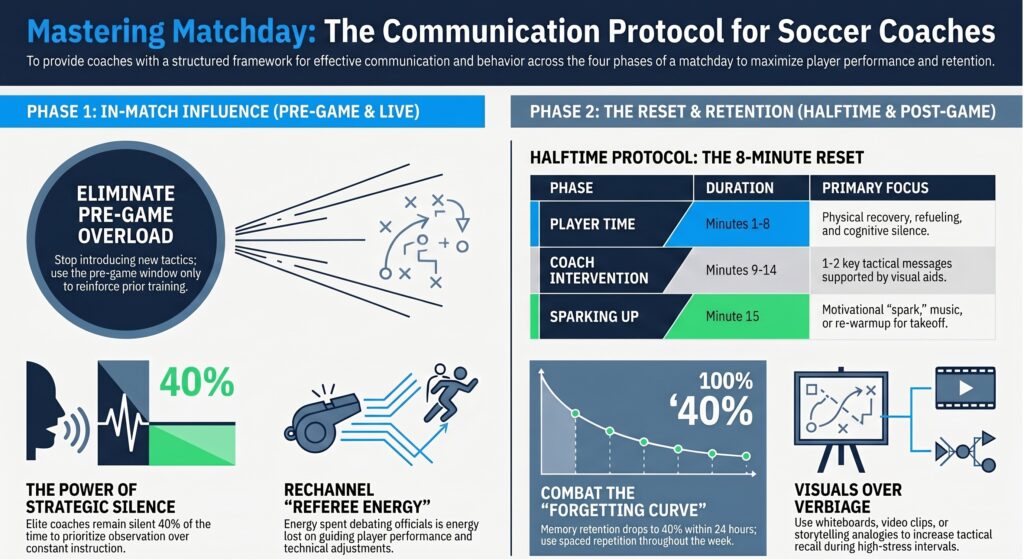
Once the whistle blows, the coach’s role shifts from teacher to observer. One of the most common pitfalls in youth and grassroots sports is “joy-stick coaching” – the act of telling players exactly where to run and when to pass in real-time, It stunts the players’ ability to develop their own decision-making skills.
During the match, your physical presence on the sideline acts as a mirror for the team. If a coach is frantic, pacing, and shouting, the players often mirror that anxiety in their play. By modeling a calm, focused state, you encourage composed decision-making.
Communication during play should be limited to “nudges” or trigger words – short, punchy cues like “Squeeze” or “Reset” that the team has already internalized during mid-week training.
The Halftime Reset and Post-Match Reflection
At halftime, the players primary need is physical recovery. Delivering a ten-minute technical post-mortem while they are gasping for air is rarely effective. A better approach is to provide a two-minute “quiet buffer” for hydration and peer-to-peer discussion before stepping in.
When you do speak, stick to the “Rule of Three”: highlight one thing that is working, one tactical adjustment to solve a specific problem, and one motivational goal for the next period.
The final whistle shouldn’t be the end of the lesson, but it also shouldn’t be a trial. For high-stakes games, emotions often cloud judgment, making immediate deep-dives counterproductive. By employing a “24-hour rule,” coaches can save technical analysis for when heads are cool.
When you do debrief, start by asking the players what they felt on the pitch. This player-led reflection fosters a sense of ownership, ensuring that the lessons learned on Saturday are actually carried over into Tuesday’s training.
Ultimately, effective match day communication is a balancing act between being a leader and being a facilitator. The most successful coaches understand that their job isn’t to play the game from the sidelines, but to provide the framework that allows their players to excel.
By mastering the transition from the structured clarity of the pre-game talk to the observant silence of the match itself, you create a space where athletes feel both supported and empowered. When you speak less, your words carry more weight – turning every instruction into a meaningful catalyst for growth rather than just more noise on a busy afternoon.
For the summary of the previous webinar with Louis Harrington read The Inner Game coaching article.
For the full webinar recording go to our partner Football Webinars.
Frequently Asked Questions
Information overload. Coaches often feel the need to fill the silence with instructions. Instead, keep it concise and focus on 2-3 key reminders that reinforce prior training.
It starts with you. If you provide all the answers from the sideline, they have no reason to speak. Use “What do you see?” questions during breaks to force them to communicate their own solutions.
Generally, no. Address collective tactical issues. If an individual needs a correction, do it 1-on-1 quietly while the rest of the team focuses on the group message.
Absolutely. Reflection isn’t just for fixing problems; it’s for identifying why things worked so you can replicate that success in the future.
EasyCoach is the operating system for youth soccer clubs, academies, and federations. It connects club operations, a coaching standard, and player development in one platform, used by 150+ clubs and federations across 30+ countries.
Run it like the pros.
The platform Villarreal CF runs on.
See EasyCoach on your club or your federation. Book a 20-minute demo with our team.

Modern Trends for Set-Piece Success
Modern Trends, Edge-of-the-Box Exploitation, and Effective Coaching Strategies
Marko Krnjić: 5 Key Insights for the Modern Football Coach
Lessons from a Career in Elite Performance

The Skill of Being Yourself: A Guide to Human-Centric Coaching
Practical Lessons on Mentorship, Practice Design, and Fostering Belonging