The Skill of Being Yourself: A Guide to Human-Centric Coaching
TL;DR
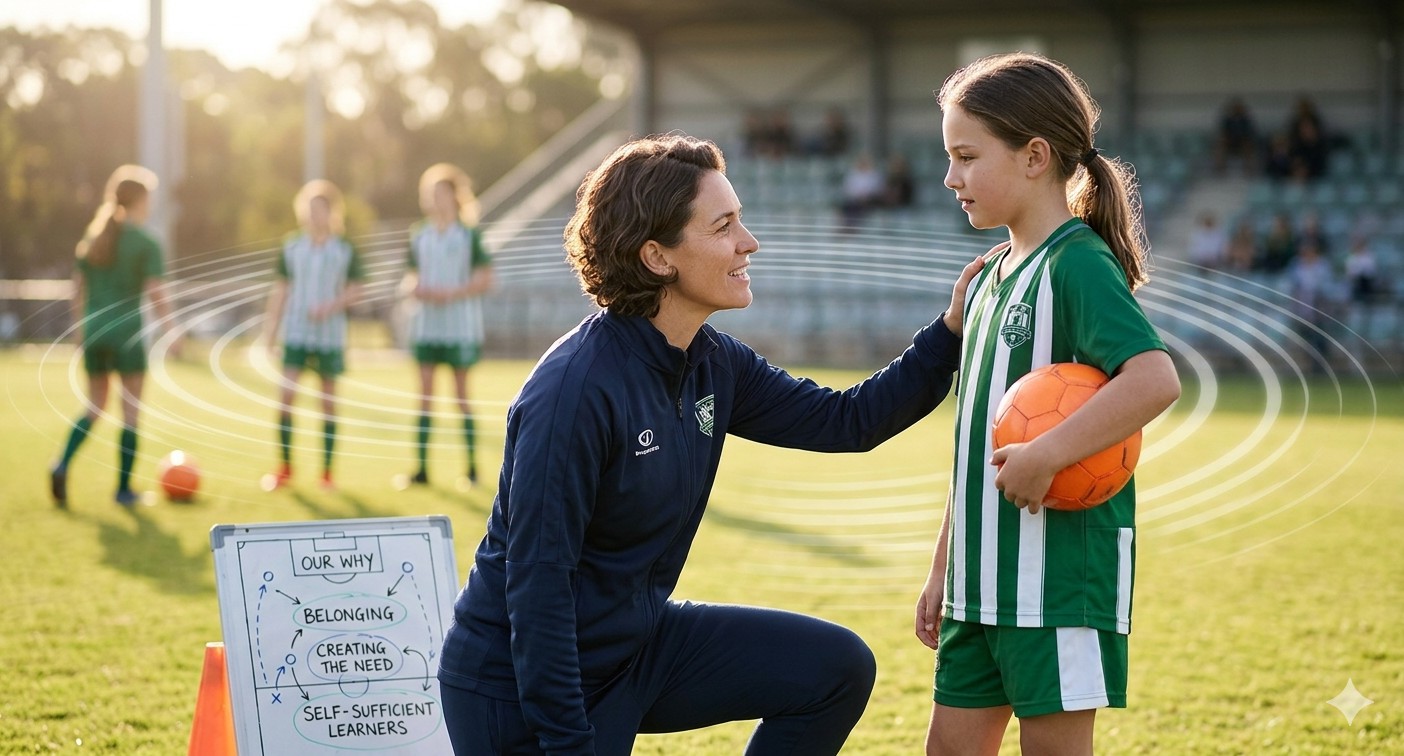
Great coaching starts with treating athletes as humans first, prioritizing true belonging and understanding their personal “why” before focusing on metrics like fitness testing. Coaches must continually develop themselves by stepping out of their comfort zones with regular “karaoke moments,” inviting outsiders to challenge their plans, and actively seeking live feedback. On the pitch, effective practice design is paramount; coaches should use rules that naturally “create the need” for desired behaviors rather than simply shouting instructions. Ultimately, the highest goal of a coach is to empower self-sufficient learners who take ownership of their development and can articulate exactly what they want to improve before they even step onto the field.
The insights shared in this article were originally discussed during an in-depth webinar featuring Russell “Rusty” Earnshaw, an innovative international performance coach, educator, and co-founder of The Magic Academy. A former elite professional rugby union player who won a European Cup with Bath and represented England in Sevens, Earnshaw has spent decades coaching elite national setups including England’s Sevens, U18s, and U20s rugby teams. Today, he is widely recognized as a global leader in coach development, consulting across a multitude of sports-including the FA, GB Hockey, and British Swimming-to challenge traditional methods and help coaches build highly engaging, relationship-driven environments.
Mentorship and the “Ripple Effect”
Coaching is fundamentally about the ripple effect and learning from others. The best coaches excel at finding teachers who possess specialized knowledge, whether that is a clinical psychologist or an expert in development. Recognizing the individuals who have influenced you and maintaining those connections is a vital step in honing your own craft. Additionally, the most effective coaches are willing to invite a “10th man” into their planning processes-someone with a different perspective or from a different sport entirely-to constructively challenge their thinking.
Fostering Belonging and Being Yourself
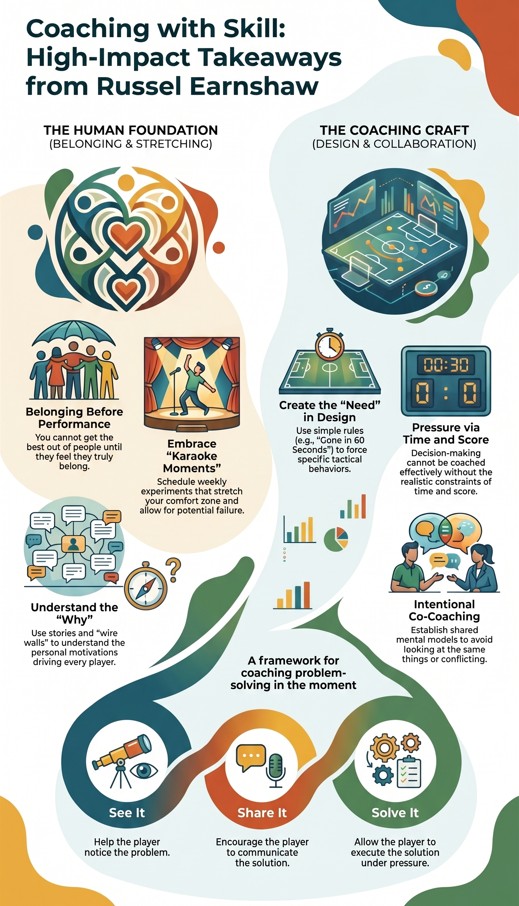
At its core, sport should be about enjoyment, belonging, and connection. You cannot get the best out of athletes until they truly feel they belong and until you understand what motivates them-their personal “why”. Environments that prioritize belonging often introduce new players by having the rest of the team share why they value them, rather than isolating newcomers and telling them they need to “earn the right”. Starting pre-season training with fitness testing is viewed as counterproductive to this goal of immediate connection. Furthermore, coaches must identify what they are uniquely good at and resist organizational pressures that try to stop them from expressing their true personality on the pitch. To grow, they must also regularly embrace uncomfortable “karaoke moments” that stretch their boundaries and force them to experiment.
This human-centric approach aligns closely with contemporary sports science research emphasizing a holistic, relationship-first style of mentorship. To explore the academic framework behind these practices, you can read the full study on the Characteristics of a Person-Centred Coaching Approach.
Practice Design: Creating the Need
Practice design is considered the most important element of coaching. Rather than simply yelling instructions, coaches should establish simple game rules to naturally “create the need” for a desired behavior. For example, if a defender forcing an attacker backwards is rewarded, attackers will organically learn to check their shoulders more often to avoid the pressure. Furthermore, decision-making cannot be effectively coached without incorporating “time and score” into training. Coaches must remember that they are playing “poker, not chess”-they should not reveal all the rules to their players, as some ambiguity forces athletes to develop necessary tactical problem-solving skills for real-game scenarios. Ultimately, the game itself judges your training, if a behavior is missing on match day, the training design needs reflection.
Intentional Co-Coaching and Coaching Craft
Expertise in coaching lies “in the eyes”, to change what people do, a coach must change what they see. This requires immense self-awareness regarding a coach’s “craft”-including knowing exactly where to stand to observe what the players are seeing. Co-coaching is often executed poorly, with multiple coaches standing closely together and watching the same exact part of the game because they haven’t intentionally planned their interactions. Coaching teams must establish clear shared principles, define exactly what each coach will focus on or what “level of the game” they are on, and provide live feedback to one another to be truly effective.
Developing Self-Sufficient Learners
The ultimate job of a coach is to create environments that develop good learners who can help themselves. Players should be empowered to create their own individual development plans, and a coach shouldn’t let an athlete onto the pitch unless they can articulate exactly what they are trying to get better at that day. Environments should utilize simple frameworks to guide behavior and learning, such as Bayern Munich’s dual focus on “joy and competition,” or the problem-solving progression of “see it, share it, solve it”. By encouraging players to ask questions, receive feedback, and set their own intentions, coaches ensure long-term, self-directed growth.
Watch the Full Webinar
Want to dive deeper into these philosophies and discover more practical ways to implement human-centric coaching? Watch the full webinar to explore real-world examples, advanced practice designs, and actionable insights that will help you transform your team culture and elevate your coaching craft. To explore the session, check out the Football Webinars platform.
FAQ
How does Russel Earnshaw view the traditional approach of starting a new season with rigorous fitness testing?He views starting pre-season with fitness testing as “ridiculous” because it contradicts the fundamental goal of building connection. Instead of making players feel like they need to “earn the right” to be there, he advocates for prioritizing belonging first, such as having existing team members tell new arrivals why they are valued and what they bring to the team.
What does it mean to “create the need” in practice design, and why is it important?“Creating the need” means designing simple rules within a practice game that naturally force players to adopt a desired behavior, rather than a coach constantly shouting instructions from the sidelines. For example, if a coach wants attackers to check their shoulders more often, they can implement a rule where a defender scores a point for forcing an attacker backwards, the attackers will organically learn to look around to avoid the pressure.
What is the ultimate test of whether a coach is successfully developing “good learners”?A coach is successfully developing good learners when the players can take ownership of their own development and arrive at a session with a clear, self-directed goal. Earnshaw states that he wouldn’t let a player onto the pitch unless they can articulate exactly what they are trying to get better at that day, whether that is improving a specific technical skill or simply being a better teammate.
How could a platform like EasyCoach help coaches implement these human-centric coaching philosophies?A club management or coaching platform like EasyCoach could theoretically help implement these philosophies by providing a centralized digital space for athletes to log their individual development plans and daily intentions before they step onto the pitch. It could also give coaching staffs a structured place to securely store players’ personal “why” presentations to foster belonging, log their own coaching “karaoke moments” for self-reflection, and quickly share live, post-session feedback among co-coaches to ensure everyone is aligned on their learning frameworks.
Run it like the pros.
The platform Villarreal CF runs on.
See EasyCoach on your club or your federation. Book a 20-minute demo with our team.

Modern Trends for Set-Piece Success
Modern Trends, Edge-of-the-Box Exploitation, and Effective Coaching Strategies
Marko Krnjić: 5 Key Insights for the Modern Football Coach
Lessons from a Career in Elite Performance

What Soccer Is Doing for American Kids, and Where It Is Losing Them
Soccer is the most-played youth sport in America and the kids in it report real benefits. The Aspen Institute's 2025 Youth Athlete…